Keep the bucket, charger and leads with the hire: a simple kit register
The machine is easy to keep track of. It's the spare bucket, the charger and the lead that go missing. A simple register helps you spot the gaps sooner.
Tom - Founder of Signd
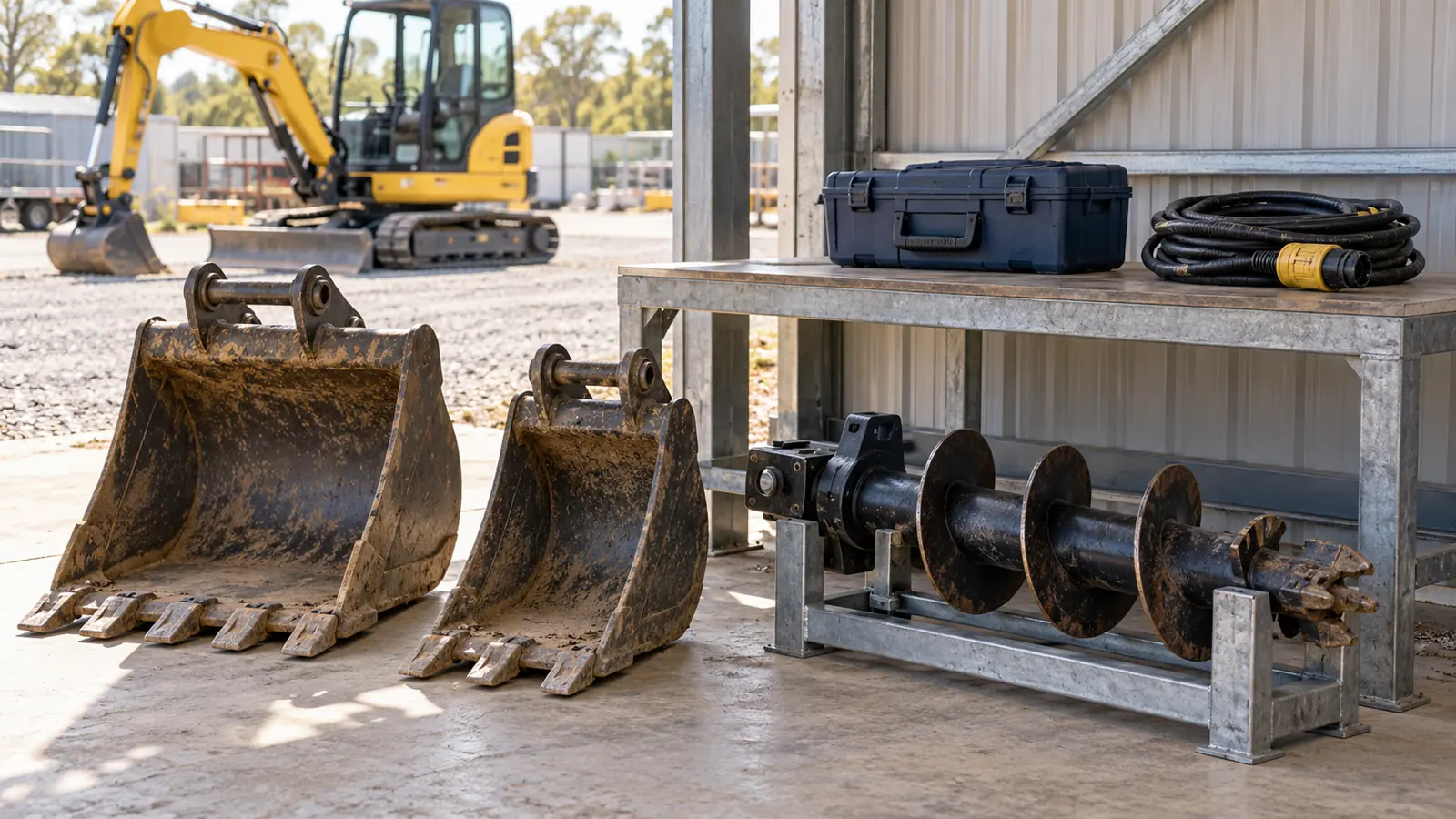
The main machine is easy to keep track of. It's big, it's on the booking, and someone notices when it isn't in the yard.
It's the smaller things that go missing. The charger left in a customer's shed. The spare bucket still on site after the excavator came back. The lead borrowed for a different hire. They're what turn tomorrow's simple pickup into a search.
A kit register fixes most of this. It's a plain record of what went out with each hire and what came back.
Give each separately hired item an identity
If an item can be hired, lost or returned on its own, give it its own code and a plain description. For example:
- EX-04: mini excavator
- BKT-12: narrow trenching bucket
- AUG-03: auger drive
- CHG-07: battery charger
A cheap tag or paint mark plus a consistent record is enough to start. Keep reusable accessories, like buckets, chargers and leads, separate from things that get used up or sold, so you're not counting them the same way.
Set a standard kit, then record what actually went out
For each type of hire, write down the standard kit: what normally goes out with it. A cordless breaker might go out with two batteries, a charger and a case.
Then record what actually went out each time. Customers add a second bucket, swap an auger bit or skip the charger because they have their own. The standard kit is your starting point. The actual list is what you check against when the gear comes back.
If you're taking the booking over the phone, our mini excavator enquiry checklist covers which attachments to confirm.
Check that attachments suit the machine using the manufacturer's or supplier's information. Don't assume a bucket, bit or lead fits just because it fitted something similar.
Safe Work Australia's model Code of Practice on managing the risks of plant (section 3.1) suggests that people hiring plant get the manufacturer's information about its purpose and proper use, so keep that information with the kit. Model codes apply where your state or territory has adopted them, so check with your local WHS regulator.
Check out and check back against the same list
Use the same list at both ends of the hire:
- Out: item code, quantity, who checked it out, date
- Back: quantity returned, who checked it in, date
- Notes: anything missing, swapped or not right
- Booking reference, so you know which hire it belongs to
A photo of the kit laid out at checkout is a handy extra, but a photo isn't a count. Someone still needs to tick off each item, at both ends.
A split return, played out
In this fictional example, a customer hires mini excavator EX-04 for a week with two buckets (BKT-12 and BKT-15) and an auger drive with a bit (AUG-03 and BIT-05). At checkout, the yard ticks off all five items against the booking.
Midweek, the customer extends the hire but only needs the auger for the rest of it, so they drop the two buckets back early. The yard records both buckets as returned against that booking, with the date.
Now the buckets can be checked and offered to the next hire, instead of everyone assuming they're still on site with the excavator.
Give returned items a home
Have a set place for each status:
- Ready to hire
- Waiting for a check or repair
- Back, but not matched to a booking yet
An item being back in the yard doesn't mean it's ready to go out. If something is damaged, dirty or you're not sure about it, it goes in the check area until someone signs it off. It's the same idea as planning real turnaround time for the machines themselves.
Give one person the job of reconciling the register at the end of each day. And keep two problems separate: a missing item is a count problem, while a damaged one is a condition problem. Condition is where a proper inspection record earns its keep.
Copy this kit register
Set up a sheet, a notebook page or a form with these columns:
- Booking reference
- Main asset
- Accessory code and name
- Quantity out
- Quantity back
- Checked out by, and date
- Checked in by, and date
- Missing or issue
- Action, and where it is now
Start with the items that go missing most often. You don't need to tag every spanner on day one.
Where Signd fits
On Signd's free plan you can list every machine and attachment you hire out as its own asset, with an asset number, and add several assets to one hire agreement. That gives your kit register one consistent list of codes to point to. Signd Pro adds bookings and inspections with photos.
Signd doesn't bundle accessories or check them in and out for you. The register is a yard habit that sits alongside your bookings. See Add your gear and rates, Create a new booking and Do a pre-hire inspection.